Wednesday, 2 July 2014

Reviews: KEYS for Source Singleplayer 2013


Minor spoilers are not indicated. If you want the full experience, play it first.

Reviewing something like Keys, a short, singleplayer art mod built in the Source engine, is extremely difficult. By definition art mods circumvent every convention of standard critique; stuck on a wall thanks to a bad bit of clipping? Its creator can say it's representative of mankind's struggle, or some other utter bollocks. In a subgenre of little meaningful interaction with a few puzzles here and there, does Keys fall into the trap of meaningless glamour and pretensions to depth, or genuinely hit some high notes?

Immediately there's a sense that Keys isn't trying to be anything more than it is. Some sequences almost have the feeling of a visual exercise of the game's engine, while others are beautiful for their own sake. It isn't part of the artist's ego or a flimsy 'edgy' idea; Keys presents its ideas and areas, and leaves you with them to figure out and play with. As a subjective piece, it may not have hit me where it did others, but I was thankful for the author's willingness to let me work through at my own pace.

On the technical side, the mod loads the first level on boot, skipping any menu time. This has the negative effect of needing a few moments to adjust the graphical settings, yanking you out of any initial immersion. Unfortunately, this is probably the opposite of the author's intention, but Source by default loads mods in a 4:3 aspect ratio. There are a couple of excessively dark areas, and one or two shonky level transitions that don't seem to function as smoothly as they could.

At one point - perhaps due to a little rushing - an ambient sound did not end on transition to next area and proved so distracting I had to use the console to stop it. The lack of a conventional menu also made the ending ambiguous at best - a 'thanks for playing' would have been appreciated. While I can understand the author's desire to not have a menu, sometimes you have to stick with convention.

Keys touches on meta elements, but never reaches the
heights of The Stanley Parable
In terms of level design, Keys is robust and functional. The idea of exposing how the engine works and maps are constituted as building blocks is touched on, in a Samuel Beckett-esque purposeful removal of immersion, but I found the meaningfulness lacking. It doesn't really go anywhere - conventions aren't subverted, and while there's some imagery in having to descend out of these areas, they feel like part of a much more haunting and grim mod altogether when juxtaposed with Keys' more complex and interesting set pieces.

Those ethereal sequences in turn are open to interpretation, and provide a solid foundation for interaction. They are strung together by a few common themes, and the storytelling finale puts a fair amount of the prior mod into an understandable perspective. The puzzle sequences are understandably simple, but sufficiently involving and unfrustrating, thanks in part to the brilliant soundtrack.

The soundtrack really is a strong point, and one of the stand-out features; haunting guitar melodies underpin your actions, and I have to give credit to the composer. It helps pace the mod, and sets the mood beautifully.


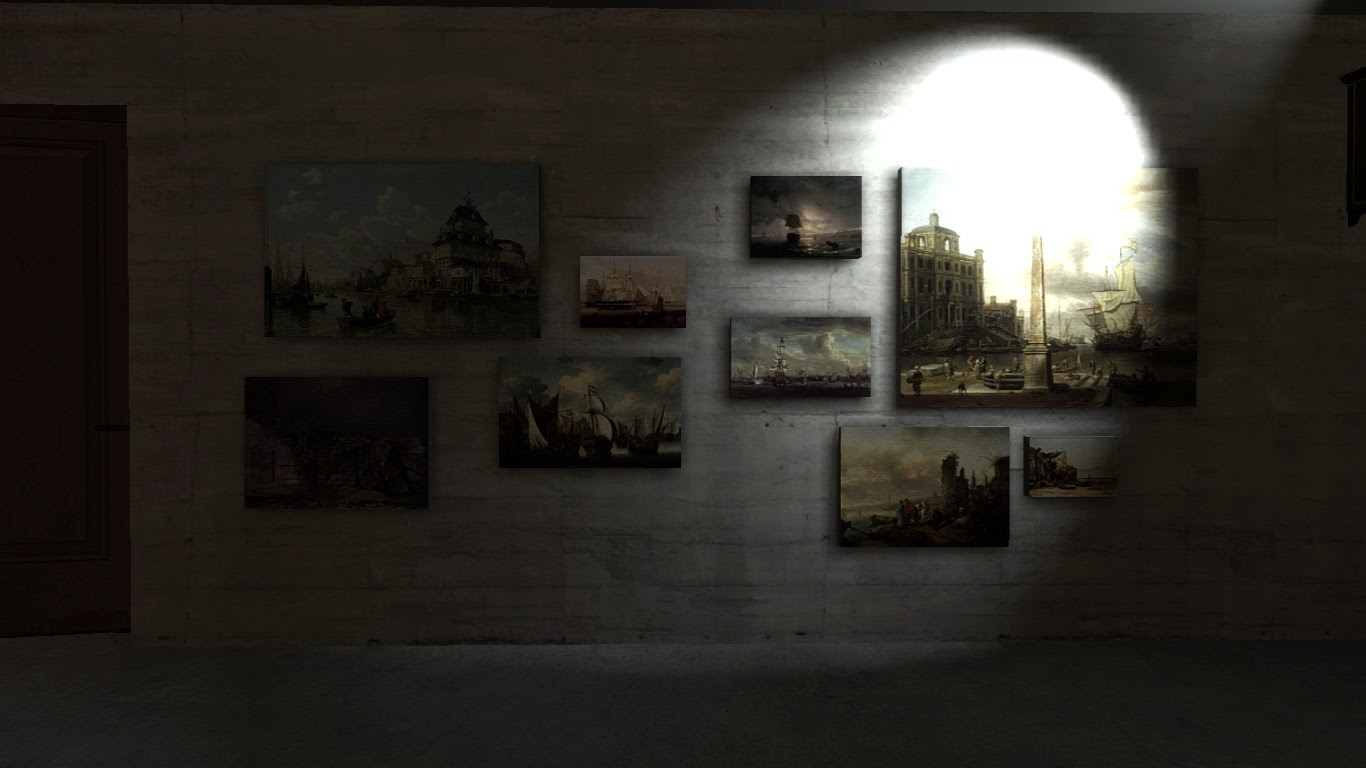
To be fair to the author, minimal gameplay is the name of the non-game here, and Keys is the first mod I've heard called an 'interactive art gallery' without it being a criticism. The line that art mods walk between game and interactive gallery is an interesting one, and the lack of a win/lose condition can raise interesting questions about whether they're really games at all. The question and presentation of art within a medium frequently interrogated for artistic merit haunts the game, and actual gameplay elements allow it to cast aside the complaints that the gorgeous-but-weak Dear Esther's recieved of being little more than a stroll with some narration.

Ultimately what Keys doesn't do is overreach - it's a piece of achieved ambition, and making a mod is no small feat. The creator is a long-time member of the same mapping community as myself, but chooses not to strive for the climactic heights of 99 Bolts, or City 17, mods that have reached for the stars and plummeted back to Earth with scorched wings. It is a short, simple, and extremely creative sequence that's worth a download if it's your cup of tea.

Arma, if you're reading this, well done mate.

Tuesday, 1 July 2014

Review: Courage for Source Singleplayer 2013


Minor spoilers are not indicated. If you want the full experience, play it first.

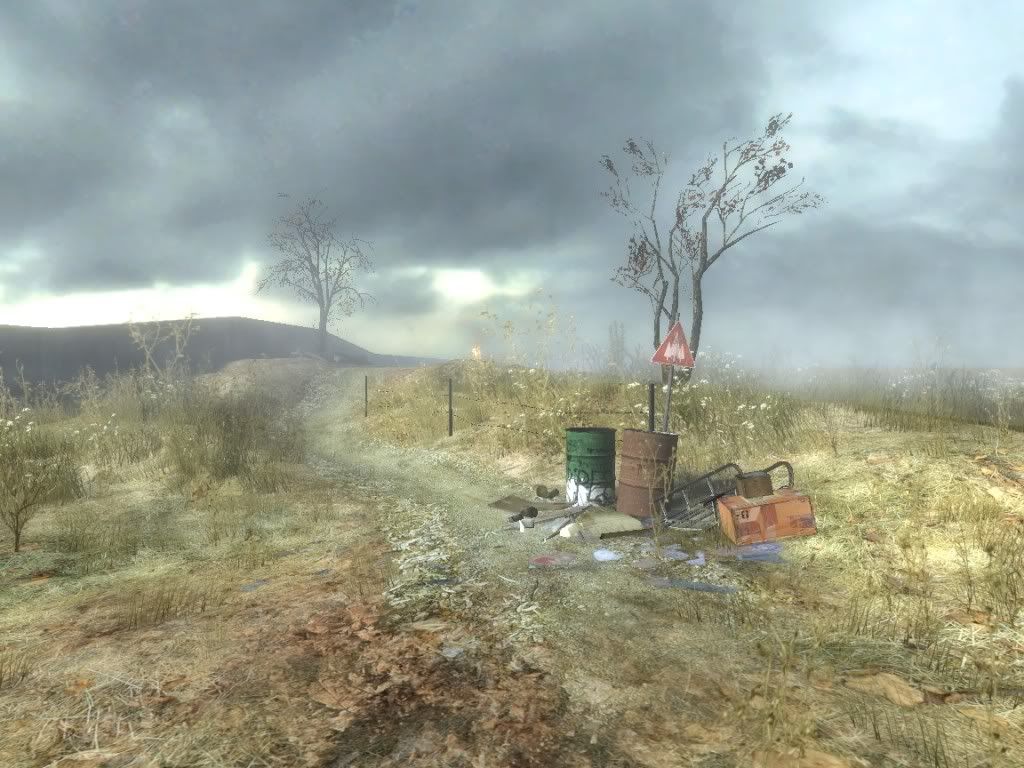
Every so often you come across a mod that really chimes with you, and Courage comes very close to doing so. Described by its creator 'turboluigi' (this is why I love the mod community) as "L4D2 meets Dear Esther", it dabbles with the former's gameplay while taking just a few pages from the latter's surrealism.

What results is a technically competent and incredibly dark piece that creates a much more resounding sense of finality than any conventional death sequence I've played in some time. Naturally, only a short singleplayer mod could pull off this kind of thing, and I gave the whole thing two run-throughs in around ten minutes or so.


Built in the Source engine, there are no major tweaks to note - the guns go bang and the bad men fall down. The conventional linearity of most Half-Life 2 mods is replaced with a single open area, which within moments is swamped with zombies. Your running gun battle allows you to grab ammunition and health, while the generously proportioned map gives you plenty of breathing space without suffering from the problems of having the shambling necrotics become a shooting gallery.

The real hook of the mod lies in 'courage', a virtual reality system that opens up to the player after eliminating the resident zombie population. Half-Life mods suffer greatly from a weapon and physics set that's ten years old, and without the resources to code in new guns increasingly clever ideas are a necessity. Once activated, courage shunts you to an alternate reality in a thoroughly jarring tonal shift that left me on the right side of bemused without being inappropriate.


Thematically, Courage absolutely nails it. The humour is subtle and the tone well-balanced. There's a sharp irony to the real world's advertisements for courage, and the facile world of the simulation is set against a grim and invasive reality. Without spoiling it, I thoroughly recommend playing the mod twice to understand the mechanics involved; the twist has frightening implications that really make you think about the implications of your actions. I'm probably going to do a writeup of that in the coming days.

On a more critical slant, I personally found some of the music in the courage sequences to border on the overly sentimental, and I think the contrast between the real and simulated worlds is sufficiently jarring without a crooning vocalist. SPOILERS I found the 'good' ending a little weak as well, and again overly optimistic for my personal taste. Like Danny Boyle's film Sunshine, this might have been one instance where the happy ending could have been replaced by an endless, one-man holdout against an onslaught. Equally, it provides firm closure and an acceptable reward for persevering, so each to their own. SPOILERS OVER.

Overall, it's very much a short-and-sweet piece that for its download size is well worth the entry fee of zero pounds/dollars/euros/whatever. While it borders the line between dull, routine, silly and manipulative, Courage very much does so in all the right ways. Thoroughly recommended.

Friday, 23 May 2014

British Politics and Gojira

TY, huffpost
Over the next 48 hours, I'm expecting the inevitable surge of political posts and blogs from my friends. Why? Because the United Kingdom Independence Party has done exceptionally well (relatively speaking) in the European Parliament and local elections, despite having dropped some interesting news bombshells over the past few weeks. On that last one, feel free to check the crime statistics; White British tends to commit a hell of a lot of them.

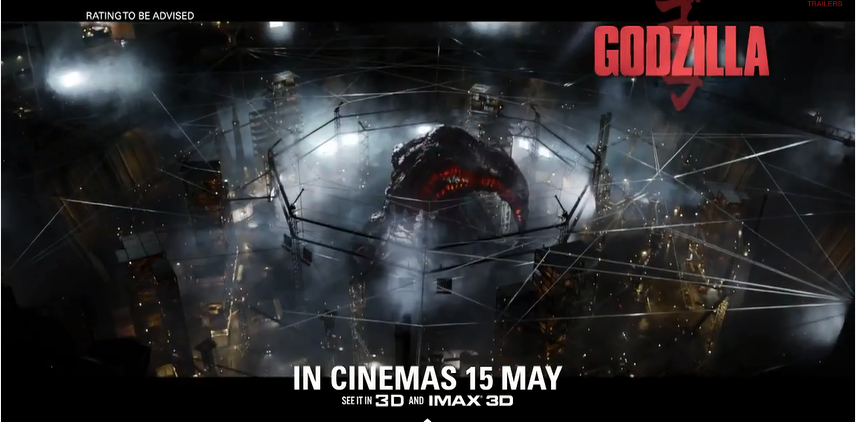
So rather than wax lyrical about something that the media's going to pound into your face for the next month or so, let's talk about motherfucking Godzilla - specifically, the critical reception. Spoilers are inevitable, but I will try to mark them out.

Did you know the Sun did a double page
spread of the tsunami with GODZILLA on it
I'm a huge fan of summer blockbusters; they're big, stupid and visually beautiful, and Godzilla was no exception. Kaiju films are something I know plenty about, but the bug never really bit me until Pacific Rim came out. Everything from the soundtrack to the visuals clicked into a big, stupid, visually beautiful 2 hour beat-down featuring one of my favourite British actors, Idris Elba. I could wax lyrical about it.

Instead let's talk Metacritic, and the lowly 62 score Godzilla has at time of me publishing this blog. Noah has a higher score at 68 for crying out loud. It's not all bad; a user score of 7.5 is nearer the mark but in a film as brutally faithful to the source material as Godzilla 2014, something's amiss here.

It’s always fun to watch scaly, skyscraper-size behemoths lay waste to civilization, but a bit more human drama wouldn’t have gone amiss.


Tom Huddleston from Time Out New York is clearly demented in his review, stating "It’s always fun to watch scaly, skyscraper-size behemoths lay waste to civilization, but a bit more human drama wouldn’t have gone amiss." Tom Huddleston seems to have missed the giant lizard memo. I admit the human factor suffers from World War Z syndrome, in that the expansion to silver screen has cast aside the individualism, but I'll throw Huddleston a bone here. The real fault is that the human drama is a bit shit. The main actor, Aaron Taylor-Johnson, is out of his element and the superb first thirty minutes highlight the problems; you can hand that to Bryan Cranston and Ken Watanabe. The latter does an excellent fly-catching impression with his mouth, but dammit if he can't nail those one liners. There's certainly enough drama, and while it meanders through good and bad the collective result is 'it'll do'.

The classic Gojira. Less hench.
Only the very weakest or strongest material goes for the throat

On the other end of the spectrum, there's the similarly recently-escaped-from-Bedlam Richard Corliss who drops a real hum-zinger, stating that "Edwards’ Godzilla dawdles toward its Doomsday climax; the movie could win a prize for Least Stuff Happening in the First Two-Thirds of an Action Film." Fuck me Corliss, I'll admit Alien was a tension-filled nightmare fest but it took its sweet time getting there, and so do many films of top-notch calibre. Equally, I can see what Corliss is on about. The human drama and the Kaiju drama don't mesh neatly, if at all. There's a nigh-obsessive gunwank occurring throughout the film with the American military masochistically getting slaughtered and rendered totally impotent. That's fine, but it's not a plot device except in the weakest of films (i.e. Battle Los Angeles).

What about the users? Well, the repeated rant is that Godzilla doesn't get to the point.


So what the fresh hell is going on? My guess is a two-pronged problem. There's a thing in DJing that's considered to be the fine art of keeping a crowd tense for that one amazing tune by constantly dropping in key bits of the song. Pendulum's Blood Sugar introduction, Psy's Gangnam Style's op, op-op - you know the kind of thing. You tease the crowd so when they get their inevitable payoff, it's all the more cathartic. You see the same thing in horror; build tension, build tension, false alarm, build tension, scary thing, rinse and repeat. Only the very weakest or strongest material goes for the throat.

Giant mechs, always a hard act to follow.
The problem is that Godzilla 2014 is ballsy because of this. Major spoilers COD4 style, It kills Bryan Cranston within 15 minutes. It does insane tension builds and then says 'fuck you, it's a seagull', and it hints and hints at an epic fight 3 times before it actually occurs. I admit, it's not the best fight, but dropping in the classic fire breathing thing? Sublime, awesome, and totally unexpected. It takes real skill for that to work, and to be frank, it misses the mark. Major spoilers over. 

This is what makes Godzilla both subtle and borderline arrogant; it takes an approach to tension and development that is incredibly slow boil that fails to appease (and in a way, pander) to audience expectations of immediate wish fulfilment. Yes, Godzilla takes an hour to appear but when he does, it's all the more powerful. Pacific Rim could pull off starting big because it could always go bigger - plasma cannons, swords, heavy ordnance, more robots - but in Godzilla we're all waiting for one thing; the Mutos and Godzilla to duke it out. Whether the time taken for that to occur is worth it is down to you as an individual - I'll admit the first 30 minutes of the film were by far and away the strongest, but it was a good ride nonetheless. If it were up to me, I'd have gone the much creepier route and made the Muto way, way more powerful and concentrated on the human thing to the extreme, making it encompass the classic force-of-nature Gojira material - then an insane fight to finish. But hey, there's always Godzilla 2, right?

Friday, 28 March 2014

Oculus Rift; A Wrathful Ramble

Right, it's 8:30am and I've been up since 10am yesterday. I've got an essay in by 1pm today that I haven't proofed, smoothed out the critical references or even finished but hey, blog time!

So, the Oculus Rift. Being an amateur dev I have a few things to say about the Facebook acquisition. For those who don't know, the Oculus Rift was/is set to dominate the VR market, showing everyone the folly of 3D and bringing us wonderful on-your-face virtual reality with modern technology. That's the ability to move your head and have that motion tracked in-game, with the additional tech benefits of high frame rates, low latency and high resolution. Check out this demo of the old version one model running with Team Fortress 2.

Then about a week ago, Facebook decided to buy the Rift and the internet threw a collective shit-fit. Putting aside the massive ethical issues - the Kickstarters who funded the original project seeing their investment moving in a direction they didn't pay out for, Facebook's highly questionable background in development, and the big questions revolving around advertising - it placed a pretty large downer on the bubbling enthusiasm that had been merrily chugging along since day one of the Rift's announcement.

Simply put, I find the idea of Facebook buying the Rift beyond belief. There's a Guardian article that raises some ok points, but it's the comment section where things really shine. Arguments are thrown back and forth, positives and negatives, PCGamer did a thing on it along with every two-bit game journalism site I'm sure. The positives and negatives seem to boil down to 'Facebook has loads of money' and 'Facebook is shit'. I'm inclined to the latter. As QuestionableTea puts it on the Guardian,

I feel like a lot of people aren't too annoyed that they sold out, its just that they sold out to facebook. A sell out to AMD/Valve/NVidia or even Google would probably be welcomed.

Right on the money, QuestionableTea. AMD and Nvidia are the biggest GPU manufacturers on the planet. They know hardware and they know it well, and have the raw capital and software skills to back it up. Nobody could have integrated the Rift's hardware better, or helped with software iteration (though considering my current drivers on my rig, debateable). Good old fashioned manufacturing manpower.

Valve? They've been working on some alright hardware for the past year. Both the controller and console/PC thing look like they need work, but it's Valve. They're software kings and don't you forget it. I maintain that the biggest reason for Half-Life 2 taking so long to come out was that they spent most of that time creating the world's first proper bumpmap shaders - in-house.

Hell, 'even' Google? They've dominated the search algorithm scene since 1998 and have pushed into hardware, software, cloudware, they're made operating systems for crying out loud. Google is where good tech goes to get better. Like the Apple of ten years ago, what Google lacks in innovation it makes up with sheer damn willpower and a thriving skillset.

What does Facebook have? Well, they bought WhatsApp and Instagram right? Two massive content sharing and communication platforms just like Faceb- oh. Ohhhh. Well, they're rich anyway right? Right guys? Oh who am I kidding they may as well have hired Peter Molyneux

Sunday, 10 November 2013

Checking Your Sources - Part One of Two

Let's start with a nice introductory piece. See this picture? Funny, amirite?


It's another one of those 'justgirlythings' parodies that's currently doing the rounds. To put it in a nutshell, poor old justgirlythings has been posting shitty items and concepts under the pretense of it being 'girly' for some time now, and it's so open to parody it's silly. It doesn't help they've been running out of ideas lately; take for example this gem. Or this one. Stay classy, tumblr.

So that picture up there? Well it derives from a very particular, old but well-known album that also happens to be doing the rounds right now - a photographer documenting his wife's decline and ultimate death from cancer.


Yep, still funny, amirite? Go check your sources. We'll be back after the break to discuss why this matters.

Saturday, 16 March 2013

Red Nose Day

There is a grim cynicism surrounding Red Nose Day in the UK. With Comic Relief having just visited our screens, there is an acute awareness in a time of severe cuts and economic concern that ultimately, despite 25 years of donations, the money is being poured down a pit. With a record £75 million raised last night, the UK has never been more generous - or critical.

This is an understandable viewpoint; huge swathes of Africa are still suffering from diseases eradicated in the West decades ago, while something as simple as a mosquito net is nigh impossible to come by. Other more developed sectors suffer from a horrific inequality between the rich and the poor, while failed governments use their brutality to keep a broken population in check. In terms of landmark change, Live8, Red Nose Day, and many other charities and telethons aside have failed to change anything and forever will fail to change anything. Despite 25 years of giving and half a billion pounds, the UK has not been revolutionised. Africa has largely been changed by political maneuvering.

However, this is a hugely reductive statement to make - Red Nose Day is not about changing the system, from shaking up a nightmare of human need that sits next to thriving nations like South Africa, Nigeria or Algeria, because it knows it never will. Red Nose Day is about changing individual lives; not out of some moral obligation or colonial guilt trip, but because we have the means to make a few small changes, and if that's all that can be achieved, then so be it. Red Nose Day will never save the world, and the money it earns is dumped down a hole never to be seen again - but it will make all the difference to several hundred thousand people in a continent of a billion people.

It is easy to be dismissive of Africa as a lost cause, but with many nations now proudly generating considerable GDPs despite political turmoil, it is not that simple. Anyone who does five minutes of research could find it is a continent as diverse as Europe or America, in topography, geography, politics and society. To dismiss it as a 'lost cause' is as productive as not giving £5 because it 'won't make a difference, and it hasn't in 25 years', because Africa, like questioning the effectiveness of giving to Red Nose Day, isn't that simple.


NB; there are many other issues with RND besides whether it's worth it, but I'm not addressing them here.

Friday, 3 August 2012

Steam Subscribers and Lawsuits

Valve Corporation are widely regarded as one of the world leaders in games design. Consumer focused, respectful, innovative and above all genuinely interested in you as a customer or potential employee, it's hard to see why some people find fault with Valve. They're a company that have brought us superb games and superb support for those games.

While I'm clearly biased it's not without good cause. However, Valve have pulled a move that has a lot of subscribers to their service, Steam, up in arms. Reported on the PC Gamer website is the news that they've created an in-house judiciary system that allows them to resolve subscriber complaints more easily and fairly, but prevents class action lawsuits. Check out the official blog post.

The bone of contention is that prevention of class-action lawsuits. A class-action lawsuit is an agreement between a large number of consumers to sue as one unit. This creates an incredibly powerful and well-funded endeavour that companies obviously fear; Steam regularly peaks at 3-4 million subscribers each day. Just 1% of those banding together to take Valve to court would be 30,000 people.

So the question is, why does this matter? As the PCG commenters note, Sony and EA have points in their user agreements that block class-action lawsuits. While inapplicable in the EU where these agreements are overridden, in the US this is a bone of contention. Often, the only way the consumer can really be heard against the monetary might of a company is as a collective. Block that ability, and the people lose their voice. With Valve's agreement, only individuals can take Valve to court.

On the other hand, Valve are widely regarded, as mentioned, as a successful yet personable company whose support has very rarely let people down. This is the tension in the point - are Valve preparing to bend us all over, or just trying to focus on individual customer service to provide the very best they can? I can sympathise with Valve's fear of cash-mongering lawyers; consider the recent case of Charles Carreon, a lawyer gone mad. Imagine a profit-focused lawyer with a vast number of disgruntled consumers behind them. The question is whether the price of the ability to be heard is worth the damage that could be done to Valve to line the pockets of a lawyer, backed by people who might not be thinking straight.

In my opinion, companies such as EA that have repeatedly demonstrated some questionable practices preventing class-action lawsuits are the real problem. Valve? A company where the founder flew to Australia to settle a dispute over L4D2? Where the founder reads every email sent to him? Where they send merchandise to subscribers out of sheer philanthropy? Where they launch a campaign that profits and helps indie game developers? A company where you are able to do what you like with the backing of your colleagues?

And these aren't isolated cases - this is what makes Valve what they are. Call me a fanboy, but haters gonna hate. Class-action lawsuits blocked? I think it's because they trust you to do the right thing, and you should trust them. I understand the threat in such an agreement, but hey, it's Gaben.

Monday, 9 July 2012

Niqab /rant

Do you have a moral standing to criticise securely from?
There seems to be a fundamental cultural problem at the heart of the niqab debate. Why did France decide to 'ban the burqa'? Why has a mother has been turned away from a parents evening for concealing her face? Let's discuss this, and feel free to disagree.

Yes, this is an old piece of news, but a very relevant issue and something that hasn't really been cropping up lately. It's something that needs greater discussion in my opinion.

It is not necessarily the refusal or the bans that have prompted me to write this article. It is more the failure to understand the culture involved with the face veil. Labels such as 'Muslim veil' place the blame on the entirety of Muslim culture. One may as well say Christians are homophobic. Furthermore, the constant referral to a burqa or burka is incorrect. The comedian Omid Dajili pointed this out on the BBC's One Show. The hosts named the veil a burqa, but it's a niqab; a face covering. The burqa is a complete covering of the body, including the eyes.

If you can't beat them...no pun intended.
I admit, it's a subtle difference, but it's the same kind of attitude that assumes Iraq is the same as Afghanistan or that Vietnam, China and Japan are all roughly similar. Sometimes we are not well informed, but we may as well be aware that we're not. The wisest man knows nothing and so on. There's a sense of ignorance, a gap in the average UK citizen's knowledge to allow them to create their own opinion.

As for the comments on that Daily Mail piece; admittedly I'm unsurprised that they're there, considering it's the Daily Mail after all. I'm not going to use them as a barometer for British opinion for obvious reasons, but there is the inevitable fact that some show the aforementioned lack of knowledge of the average citizen.

Can you accept penalisation of those who are already
supposedly suppressed?
Consider that the perfectly logical comment "she is no threat to society , an everyday women dressed according to her beliefs and the world has a problem to that! [sic]" has 12 downvotes. The less informed "She could have removed the face veil, as it's not required by her religion to wear the niquab [sic]" is incorrect, but has 8 upvotes. 


'Her religion' encompasses a vast array of interpretations, just like Christianity, Judaism or Hinduism. In her interpretation, it may not be possible to remove her veil. I'm not foolish enough to say upvotes on the comments section of a newspaper's website are a valid indication of widespread British opinion, but it makes you think.


While there is a possibility that it may be her husband's or society's requirement that some Muslim women, perhaps the one in question, wear the niqab, that's a whole other argument that I'm not going to discuss in this post. Let's try to stay focused on cultural clash and ignorance.


For every ignorant or hateful comment on something as simple as religious clothing though, there is one pointing out the everyday-ness of such dress, the hugely tolerant nature of the UK, the acceptability of such dress sense (minus the connotations of control) and so on. I hope that the UK can provide an example to the rest of the world that while some of us as citizens may not like something, we are a culture that is used to change, to flexing around influxes of new peoples.

"(Potentially) suppressed women are suppressed by a society that fears and pities them, asking questions about why they wear the niqab while vilifying them for doing so."

Equally one cannot skip around the argument forever. Can I be absolutely sure that in 100% of cases the burqa is used voluntarily? No. But why should something like this jeopardise a person's right to find out how their child is doing at school? Think about that; the UK media bombards those who wear the veil with questions about anonymity and suppression, in turn doing nothing more than amplifying those two demons. (Potentially) suppressed women are thus suppressed by a society that fears and pities them, asking questions about why they wear the niqab while vilifying them for doing so.

Indeed, we as a Western culture have very little moral standing to criticise the possible oppression of women in such a manner. In a society that hates imperfection, and constantly assails us with impossible high standards that we are visually expected to meet, where every visual medium - even the most recent - has a grim history of objectified and stereotyped women, can we comfortably criticise? Sharia Muslims may use the niqab, but Californians have Photoshop.


NB; I do not condone forcing any human being into any action. I understand there are hardline Muslims, as with any religion, but the focus of this blog post is on cultural clash.

I was at Silverstone this weekend, apologies for the late post.

Friday, 22 June 2012

Africa and Epic Meal Time

For those who don't know, Epic Meal Time are a YouTube phenomenon where a selection of pseudo-personalities cook up insane dishes from lasagne constructed from 45 burgers to the bird-in-a-bird-in-a-bird-in-a-pig turbaconthanksgiving. I am a massive fan of Epic Meal Time; I've even got a few t-shirts.

However, this post isn't focused on Epic Meal Time itself. It's about something I often see in the comments - 'people in Africa' and 'disgusted' are the two main criticisms. While EMT's brand of food porn is undeniably distasteful, that's part of why it's so successful. It's a tongue-in-cheek approach to shows of gluttony we see on Man V Food and so on, but with a side-order of creativity and humour.

Returning to the matter at hand though - how can filming a man eating his own body weight in bacon be justified when approximately 4 million people in the UK alone are below 40% of the median income? That would be less than £8000 per year, yet that is still extremely affluent compared to the poorest of the poor, who would outnumber the UK's population by a rather large amount. In 2005, 80% of the world population lived on less than $10 a day. That's around 4.8 billion people. It would take these individuals at least 8 days to be able to afford the first purchase in EMT's video, assuming they forgo purchasing food, drink, rent, electricity, gas or whatever amenities they may have.

But let's move on from the constant barrage of figures we get so often in news - let's ask the burning question.

"Is Epic Meal Time able to justify their purchase, consumption and wastage of this much food, considering the poverty in the world? Yes."
Well, yes-ish. The fact of the matter is that Western consumption of resources is hugely damaging, particularly considering the environment and so on, but food is not oil. Food is a sustainable, renewable resource that is reasonably easy to get hold of with the right tools and expertise. From the wastes of Siberia to the American deserts to the English countryside, food can be grown or found. Saying "people in Africa can't eat like that" is an ignorant response to EMT and an ignorant and groundless criticism. US resource consumption is obscene, but it simply does not apply to food in the same way.

Unlike resources such as oil and precious metals that are non-renewable and largely pilfered from many African nations, food is scarce due to internal problems in nations. Furthermore food is not scarce in every nation. I won't go into the bizarre tendency of the Western people to discuss to vast continents such as Asia and Africa with blanket statements (which I myself am guilty of), but in any case it is an illogical conclusion that because I can eat well, I should not waste food that Ethiopia may need.

Ethiopia, Uganda, Zimbabwe, Niger, Tanzania - these nations are struggling for their own reasons and their issues are nothing to do with the UK throwing away 3.6m tonnes of food waste per year. So let's get to the nitty gritty; why.

Without the aforementioned skills and such, people cannot grow food. Agriculture is a mature technology since the green evolution, but only in the West where it can be financially and technically supported at such a massive scale. The population explosion in Africa and subsequent political problems that have plagued many nations have jeapordised any technological transit, and current technology cannot support agriculture when a crop fails. In the West, a harvest does not really fail, and even in the rare case when it does, there are thousands more fields in tens of other countries.

The Niger Delta
Take Zimbabwe for example; once white farmers were forced from the country, food production fell dramatically. While it has picked up, it is a good example of the effect of expertise. The white farmers knew what they were doing, while the new land owners did not. The result? A massive decline in yields.

Improving expertise is the basic objective - give a man fish, give a man a rod etc. - but it is also a three pronged problem. One, political problems are a considerable barrier. Two, getting the technology up to scratch locally, rather than other nations constantly sending tools and equipment. Three, educating people adequately and maintaining that level of education.

However, I won't delve into the theory or facts any further. Suffice to say that food wastage and excessive consumption in the West are their own problems with many causes and effects, while the African food crisis is down to a vast array of reasons - but absolutely nothing to do with the West's food consumption.

To conclude, rather than berating those who waste or consume excessively, more should be done to help these nations in question. Don't send them food aid unless they desperately need it; send tools, send machines, send expertise. Epic Meal Time shouldn't send food or money, despite the moral correctness of such an action. Perhaps it would be useful, but these problems are down to transnational corporations, political corruption and past government actions. I'd rather see Shell helping people in the Niger delta rather than creating a brutal war and ruining the nation, than Epic Meal Time playing any part - they are neutral in the matter, and this applies to anything that is verbally linked to famine in other parts of the world. Can they help? Yes. Should they help? Maybe.

Saying 'people in Africa can't eat like that' as a criticism completely ignores the far bigger issues at the very root of the problem, in the same way Kony 2012 ignores the tangle of problems within Uganda.

Saturday, 9 June 2012

Kickstarter /rant

I read a friend's post about Kickstarter this afternoon, and I felt he made a fair number of valid points. This seems to be cropping up increasingly as of late; the question of whether a project 'deserves' to go on Kickstarter, and I think it's started to become worthy of serious comment.


There is a clear parallel to be drawn with projects on a game developer's forum I frequent, though I should mention the 'problem' isn't limited to video games. Anyway, speaking as a collective, we often get posts from modders along the entire spectrum of ability; from total noobs through to university educated designers. The Source scene's in a big decline at the moment, so they haven't been as frequent as usual. However, time and time again these people genuinely expect us to get involved in their projects.


Double Fine is an example of how good Kickstarter can be
Admittedly, the Source community at interlopers.net is "generally cynical, critical [and] routinely destroys newcomer's hopes and dreams through giving them a non-euphemised point of view about their suggested projects" as one friend put it, but there's reason to this. These projects are created by 'ideas guys', whose skillset is lacking and their understanding of the processes involved in games design minimal. We can spot a project that's going to fail a mile off because we've all been there. Many indie and amateur devs are often guilty of saying "I promise we'll finish this" and failing to, but the sad fact is we all know it's an empty promise. Devs lie to themselves more than the target audience when they pitch ideas.


We all expected Raindrop to be a success - and it wasn't.
Would you fund a project not knowing if it would work?
What's more, even projects belonging to people with an excellent set of ideas and skills can rapidly go down the pan. Consider Nightfall, Raindrop - mods that we all expected to survive and prosper.


So where am I going with all of this?


The posts that I've read, from the ideas men to the experienced modders, get torn to shreds on Interlopers. We cut them hard and cut them deep because that's what we do. We're hard-bitten, self-taught workers of a craft and we're not going to bow down to someone with an (admittedly decent) idea but no skill or knowledge of the effort involved. We don't get paid to do this, y'know. Once upon a time, these ideas would get our support or our criticism, and they'd go from there with knowledge, experience and refinement - or be rightly binned entirely. Ever heard of City 13 by MajorBanter? Of course you haven't, because it was an awful idea and it rightly got no quarter at Interlopers. So let's expand this to the general playing field of games design.


"You're not funding a project - you're funding an ego."


Now, any game dev who thinks he or she has a half-baked idea will look at Minecraft or Orion's success on Kickstarter and genuinely believe that they can do it. Perhaps they can, but what about motivation? Skill? Interest? Ability? Design? The key tenets are set aside for a self-masturbatory attempt at what is basically validation of an idea. You're not funding a project - you're funding an ego. I'm sure there are many excellent Kickstarters out there, but for every Tim Schafer there's a MyLittleBronycon. One is a heartfelt attempt to build something, and if it fails then it dies gracefully and with our respect, as Raindrop did. The other is a bizarre, sickening and pointless moneygrabbing venture that wouldn't last five minutes on a public forum.

Feel free to debate this with me - this is a superficial conclusion, and there's plenty of health in this argument. Is Kickstarter a menace as much as a positive thing? Do these successful and honest projects outweigh the delusional ones? Let me know. But right now, I feel that instead of opening these projects to the much needed criticism and support from fellow individuals is analogous to the almighty playtest. It fixes fundamental problems, or gives you the knowledge of whether to bin the whole thing or not. By just skipping to Kickstarter, amateur devs undermine their own project and undermine the positive values of Kickstarter in search of a quick buck, motivation, or as far as I'm concerned the positive feedback they crave. And at the back of their heads will be a niggling doubt asking that big question - is this idea really as good as I think it is?

Friday, 25 May 2012

Stroll: Field Zone - Enemy relationships to the Player

Introduction

The original Field Zone mod had a real problem in terms of ambition - it's a common mod killer. To try and fix this issue, Stroll has moved away from the rather ambitious step of messing around with replacing the Combine or figuring out hybrids and simply setting the mod in the HL2 universe. It's a total cop-out, but it's easier, quicker and makes no real difference at the end of the day.

However, new problems arise from this approach. Stroll is already setting itself apart from many HL2-universe based mods with its considerable difficulty curve and fresh new weapons and locale, but the fact of the matter is no amount of Photoshop is going to make the Combine act any different. Sure, you can sharpen them up and radically change their look with very little work, but Kate Moss is still Kate Moss even if her eyes aren't crossed in Grazia. The relationship between the Combine, Player and Citizens needs to be changed. The core dynamic of the relationships needs tweaking. As I will iterate time and time again, it's how the player interacts with a situation that changes how they feel about it, not they look of it.

How is this achieved? Why?

In a bid to try and make the citizen/Combine relationship a little more complex, Stroll's small population of grizzled refugees don't attack or interfere with the Combine operations, and the Combine thus leave them alone. This forces the player to second guess their decisions; if you see a bunch of Combine soldiers and you're not violating their security or shooting at them, they'll ignore you. Not only will attacking them put you in a pretty dangerous situation - you're extremely weak without Gordon's HEV suit - it'll also annoy Stalkers that would otherwise assist you.

There's no real purpose to this besides making the gameplay a bit more thinky and less shooty. The player can't just jump into a bunch of enemies and kill them all, because they might have to then trek through a basement full of zombies with low health because the only Stalker who knew a door's combination lock has been killed. It'll also bring life to the story and generally just make everything a bit more colourful and interesting. Furthermore, as mentioned, it distances Stroll from the usual HL2 mods. If I'm stuck with the Combine, I may as well be resourceful with them.

An Example

A simple scene is shown to the left. Originally, the six soldiers and the APC functioned as a show of force to inform the player there was a heavy enemy presence in the area, but it quickly developed into something more dynamic. I made the Combine purposefully show no interest in the player. After some tweaks to their scripting, they only returned fire when attacked.

However, I knew even without playtesting the section I a player would react immediately to what they percieved as a threat. I had to show the Combine were present and powerful, but not an immediate threat. The player needed to be taught not to engage on sight.

Christoper Livingstone gives a good example of a player lesson in his Concerned Webcomic notes;

"The rollermines are a prime example of how Valve teaches you how to play the game while you're playing the game. In the Black Mesa chapter, shortly after you get the gravity gun, there's a highly enjoyable sequence where you get to play catch with Dog, using a deactivated rollermine (though you don't know it's a rollermine at the time, it's just his ball). A few chapters later, you encounter the real, dangerous rollermines that like to attach themselves to your car and give you electric shocks. And then you realize that the catch with Dog wasn't just teaching you how to use the gravity gun, but also that you can use it against this particular enemy."

Teaching the player in these situational ways is far, far better than some of the truly horrific tutorial methods out there. From Egoraptor's gripe about explanational tutorials in the form of narration, images and text to the awful example in Dwarfs?! there are many bad ways to explain to the player what to do. I could have had a narration telling the player or a bit of writing on the wall, but they're lazy and easily missed. Instead, I simply placed a citizen in clear view of the patrol, watching it. The player does not need instructions or orders - humans are naturally observational and will learn very quickly if you just show them in the right way.

Conclusion


I haven't playtested this yet, but I'm reasonably confident it will work. I'll get back to you on results, and a blog post explaining the uses and advantages of situational teaching. This concludes a post covering Stroll's dynamic relationship between the enemy, player and NPcs and how the player is taught about this relationship.